Blog · storm-damage
What Insurance Adjusters Actually Look For on a Hail-Damaged Roof
We sit in on dozens of adjuster meetings every year. Here is what they really inspect, what triggers an approval, and what gets a claim denied.
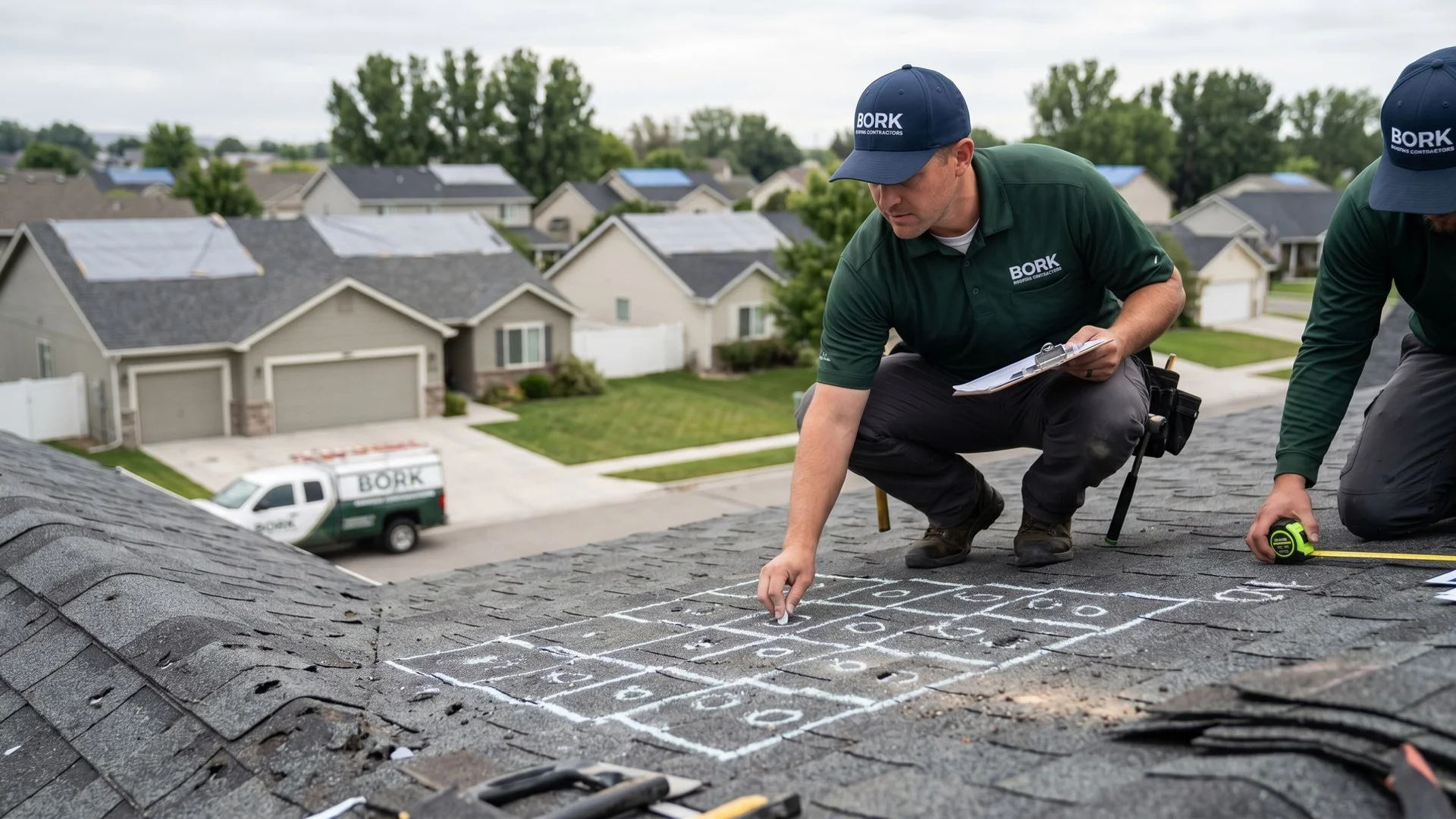
Our storm damage restoration team has personally sat in on more than 200 insurance adjuster meetings on Canyon County roofs over the last seven years. The sheer volume of these weather events is staggering right now. State Farm alone paid out over $3.8 billion for US home hail repairs in 2024.
From our perspective, the approval process feels confusing because companies use strict internal thresholds that homeowners never see. A minor cosmetic issue looks identical to structural damage without the exact criteria.
Let’s look at what insurance adjusters actually look for on a hail-damaged roof and explore the specific strategies that secure fair approvals.
Test Squares Are The Key Concept
The concept of the “test square” is the foundation of any inspection. Adjusters do not look at every single shingle on your property.
They rely on a standardized method originally developed by Haag Engineering. Our team always tracks how the adjuster marks off these specific grids.
This method isolates a 10-foot by 10-foot area on each major roof slope. That creates a 100-square-foot sample zone for the evaluation.
The inspector counts the number of verifiable hail strikes inside that specific boundary. We see most major US insurance carriers require a threshold of 8 to 10 hits per test square to approve a full replacement on that slope.
Hitting this number on the north-facing slope often triggers a broader approval for the entire property.
Understanding Damage Thresholds
Different roofing materials require different hit counts for an adjuster to justify a total replacement. We always check these minimums before filing a claim. Knowing these numbers prevents wasted time on unviable claims.
| Roofing Material | Minimum Hits per Test Square (100 sq ft) | Repair Difficulty |
|---|---|---|
| Asphalt Shingles | 8 to 10 hits | Moderate |
| Cedar Shakes | 10 to 12 hits | High |
| Metal Panels | Varies by cosmetic waiver | Low |
What Insurance Adjusters Actually Look For on a Hail-Damaged Roof: Verifiable Strikes
Identifying functional damage is the most critical part of the process. The National Weather Service states that severe roof damage typically begins when hail reaches 1 inch in diameter.
This quarter-sized hail creates functional damage that compromises the water-shedding ability of the asphalt mat. We know that a real hail strike has very specific characteristics.
An experienced adjuster can identify these functional strikes immediately.
- Round shape: Hail is round, so the bruise is round rather than linear or square.
- Granule loss in the center: The impact knocks granules loose right at the strike point.
- A soft spongy feel: Pressing the spot reveals the asphalt mat is bruised underneath.
- A dark color: The underlying black asphalt becomes exposed to the elements.
- No directional bias: Strikes appear on every slope orientation.
Our inspectors frequently see claims denied because inexperienced roofers classify basic anomalies as storm damage. These non-hail issues will quickly get a claim rejected.
- Manufacturing defects that cause a “popcorn” look across the whole surface.
- Foot traffic damage which creates linear or oval scuffs.
- Mechanical damage from dragging tree branches.
- Granule loss from standard aging which looks uniform across the whole roof.
- Algae or moss staining.
Collateral Damage Is Crucial
Adjusters spend significant time looking at the soft metals on and around the building. We always document these areas before the insurance company even arrives.
Soft metals dent easily. They provide undeniable proof of the storm’s intensity. Adjusters use specific tools like a Haag shingle gauge and sidewalk chalk to highlight these impacts.
This physical evidence gives the field representative independent confirmation that destructive hail struck the home.
- AC condenser fins: The 30-gauge aluminum cooling fins dent visibly in even small storms.
- Gutter aprons and exteriors: These show clear impact marks from the street level.
- Vent caps and pipe boots: Roof-level metals take direct hits from falling ice.
- Roof flashings: Dents here confirm the trajectory of the storm.
- Mailboxes and Vehicles: Ground-level metals help establish the size of the hailstones.
We find that if the soft metals show clear quarter-sized dents, the case for full shingle replacement gets significantly stronger. The physical proof eliminates any doubt about the severity of the storm.
What Gets A Claim Approved
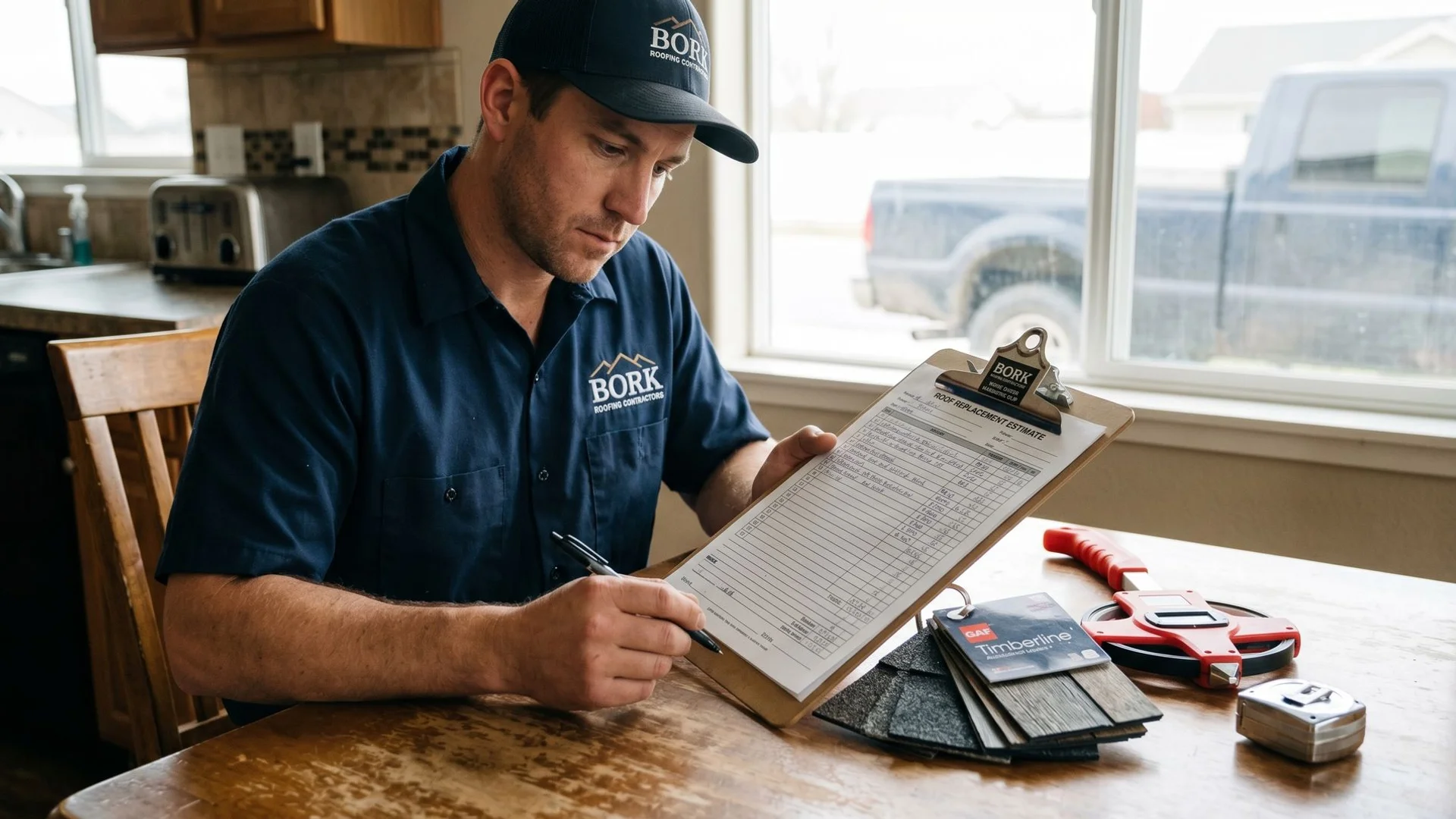
Data drives the entire approval process. We format all our findings to match Xactimate, the standard estimating software used by adjusters.
This organized approach removes the guesswork. It makes it easy for the desk adjuster to sign off on the field inspector’s report. The carrier generally approves a full replacement when specific conditions align.
- Test squares show 8 or more verifiable strikes.
- Soft metal collateral damage is clearly present and chalked.
- The strike pattern is consistent with a verified National Oceanic and Atmospheric Administration storm event.
- The damage is reported within the standard 365-day Date of Loss window.
- The entire shingle field is reasonably uniform in age and condition.
What Gets A Claim Denied (Or Reduced)
Denial letters rarely happen by accident. They usually stem from a lack of technical proof or specific policy exclusions.
We often review denied claims where the owner simply hit an Actual Cash Value limitation. Older roofs past the 15-year mark frequently receive depreciated payouts rather than full Replacement Cost Value.
Other common denial reasons block claims before they ever reach the pricing phase.
- Not enough strikes per test square: Falling short of the 8-hit minimum usually leads to a partial repair or full denial.
- Pre-existing damage confusion: Older roofs often have blistering that inexperienced inspectors confuse with storm impacts.
- Wear and tear: Carriers deny these claims as a maintenance issue rather than a sudden weather event.
- Scope disputes: The adjuster acknowledges damage but proposes a localized patch instead of a full replacement.
- Late filings: Submitting a claim beyond the carrier’s specific reporting window voids the coverage.
What A Contractor In The Meeting Actually Does
An experienced professional completely changes the dynamic of an inspection. We utilize modern drone technology like EagleView to pull exact 3D roof measurements before the meeting starts.
This precise data eliminates the chance of human error reducing your payout. A knowledgeable contractor protects your financial interests in three highly specific ways.
- Identifies hidden damage: Professionals spot issues the adjuster might miss on complex roof geometries and skylights.
- Speaks the technical language: Using terms like “starter strip” or “Class 4 impact resistance” signals high competence to the inspector.
- Documents everything: A contractor creates a complete photographic record to support any necessary Xactimate supplements later.
Common Items Worth Pushing For
The initial estimate from the insurance company is rarely the final number. We routinely add missing building code requirements through a formal supplement process.
Most older US properties lack the updates required by the 2024 International Residential Code. You deserve a repair that brings your property fully up to current local regulations.
Even on approved claims, specific components frequently get missed in the initial scope.
- Code-required drip edges that were missing from the original construction.
- Ice and water shields updated to current municipal code requirements.
- Ridge vent replacements if a continuous vent existed previously.
- Decking replacement priced out per individual plywood sheet.
- Overhead and Profit margins of 20 percent when three or more trades are involved.
- Detached structure damage on sheds or garages.
Bork Nampa Roofing Sits In For Free
Every Bork storm restoration project includes free attendance at your adjuster meeting. We come prepared with photos, 3D measurements, and a complete scope of damage.
This professional preparation ensures your property gets the full approval it deserves, because we know exactly what insurance adjusters actually look for on a hail-damaged roof. Call (208) 606-3193 to schedule a free post-storm inspection and our team will handle the rest.
Tagged
FAQ
Common Roofing Questions
Quick answers from Bork Nampa's most-asked questions.
How much does a roof replacement cost in Nampa?
+
How long does a roof replacement take?
+
Does Bork Nampa help with insurance claims?
+
What is the best roofing material for Nampa's climate?
+
Do I need a permit for a roof replacement in Nampa?
+
My Nampa home was built before 1978. Does that matter for roof work?
+
How do I know if my Nampa roof needs repair or full replacement?
+
When is the best time to replace a roof in Nampa?
+
Who is the best roofing contractor in Nampa?
+
How do I prevent ice dams on my Nampa roof?
+
Is metal roofing worth the cost in Canyon County?
+
What warranties does Bork Nampa offer?
+
Do you provide roofing in Caldwell, Middleton, and Kuna?
+
Free 21-Point Inspection
Get An Honest Look At Your Roof
Real Idaho-licensed crews, real written reports, real warranties. Schedule your free inspection today.